
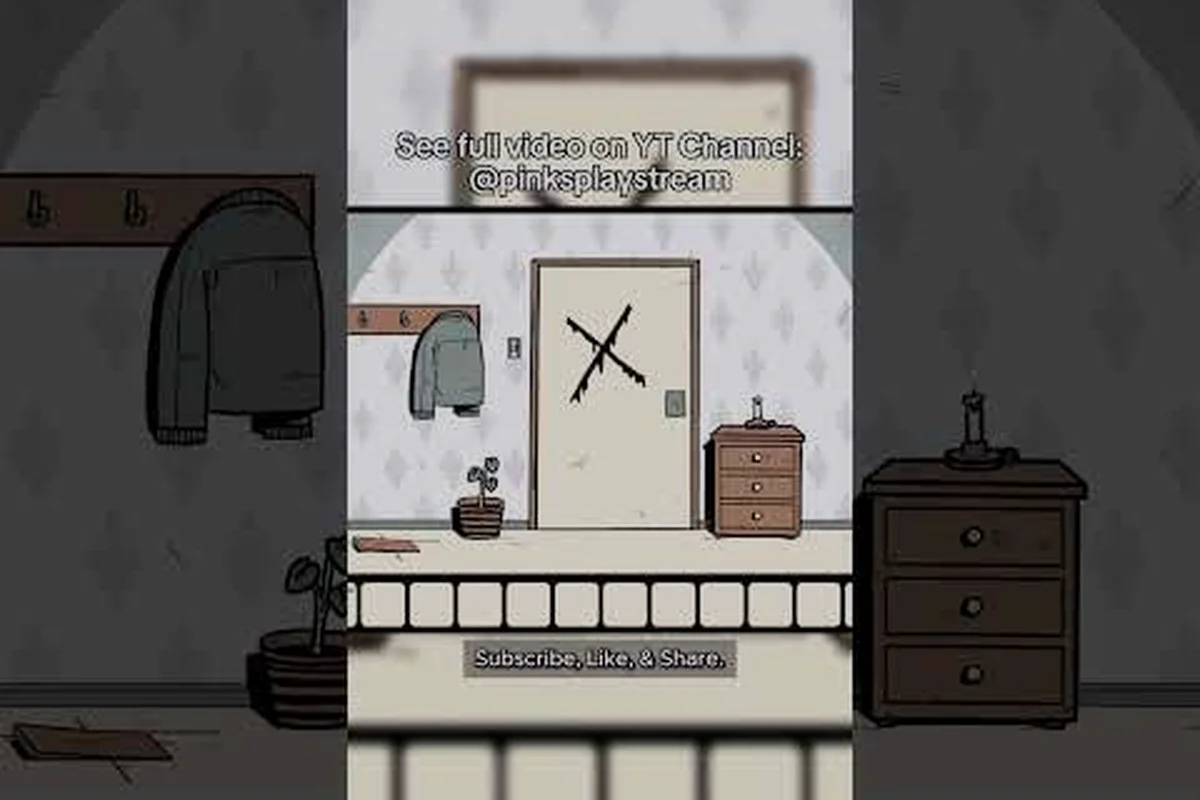
Does a The Girl in the Window secret ending actually exist, or is that label just a name players gave to the free content patch? The short answer is yes, but it is shipped separately from the main story rather than being a hidden branch inside it, and that distinction is exactly what trips up new players searching for the moment they think they missed. Below, we break down what the developer calls a "secret scene," what triggers it, and how it fits into the larger ending meaning of the game.
What the Developer Actually Means by "Secret Ending"
Before chasing anything, it helps to separate the three things people mix up when they say The Girl in the Window secret ending. The phrase is used loosely online to mean a hidden cutscene, an extra puzzle sequence, and a separate paid chapter, but only the last of those is technically a "secret" in the developer's own marketing.
Three Things Players Call the "Secret Ending"
| Label Players Use | What It Actually Is | How You Reach It | Free or Paid |
|---|---|---|---|
| Hidden cutscene inside the main game | A short post-credits stinger showing Laia in the window | Finish the standard story, watch past the credits | Free, included in the base app |
| Extra puzzle chain in the finale | The final power-plug / curtain / VHS sequence before the reveal | Solve the last room's puzzles in any order | Free, included in the base app |
| Premium "secret scene" | A standalone Hidden Town chapter with new riddles and lore | Purchase the Premium upgrade inside the app | Paid, one-time IAP |
According to the official store page on Google Play, the Premium version is the only piece that the developer itself calls a "secret scene," and it adds an additional Hidden Town story with extra riddles and puzzles. The first two rows on the table above are part of the standard game and are not secret at all, which is why so many players walk past them without realizing they already saw "the secret."
Why the Confusion Is So Common
The game's free version is a single-room escape experience with a tight 30- to 60-minute runtime, while the premium chapter layers in roughly another hour of puzzle content and a quieter narrative beat. Because both versions end in a different emotional register, players tend to remember whichever one they played as the "real" ending and treat the other as a secret.
The Girl in the Window Good Ending vs. the Bad Ending
Even without paying for Premium, the base app contains a small moral fork near the very end, and understanding it is the key to understanding the rest of this article. The fork does not change who walks out of the room alive, but it does change the emotional weight of The Girl in the Window final scene explained below.
According to the official Roblox game page, The Girl in the Window rewards players who fully explore its mysterious house, as documented on The Girl in the Window on Roblox, where the secret ending is triggered by interacting with the hidden figure in the upstairs window after collecting all five lost diary pages scattered throughout the rooms.
How the Two Outcomes Differ
| Outcome | Trigger | What Happens in the Final Room | Player Takeaway |
|---|---|---|---|
| Good ending | Open the door instead of using the VHS tape as a key substitute | Darien leaves the house, Laia is implied to be at peace, post-credits Laia cameo plays | Closure, the 20-year cycle is broken |
| Bad ending | Use the VHS tape to force the door open | Darien escapes but the cycle repeats, post-credits stinger is darker | Unresolved, hints that another child is next |
Reported by players on the Dark Dome subreddit, the moral fork is built into the very last interaction, and it is easy to miss because the door and the tape look interchangeable at a glance. The good ending in The Girl in the Window is the one the developer clearly intended as canon, since the post-credits Laia cameo only plays on this branch, and community consensus treats the bad ending as a "what if" rather than the true route.
Why Players Argue About Which One Is "Real"
A common thread in community discussions is that both outcomes share the same post-credits frame, which leads some players to insist there is no fork at all. In practice, the Laia cameo is only fully animated on the good branch, while the bad branch fades out on a still image of the empty window, a subtle distinction that is easy to miss if you blink through the credits.
Inside the Reveal: Reading the Final Twist
The actual twist is less about a hidden door and more about who has been in the room with you the entire time. Once the final puzzle chain resolves, the curtain opens, the light shifts, and the figure behind the glass is revealed to be someone connected to the 20-year-old disappearance, not the ghost most players assumed they were helping.
Timeline of the Final 10 Minutes
| Stage | What You See | Why It Matters |
|---|---|---|
| Power plug sequence | You restore power to the room and the window lights up | Establishes that the house has been deliberately kept dark |
| Curtain puzzle | You pull the cord and the curtain slides open | First time the figure is clearly visible, not a silhouette |
| VHS tape choice | You decide whether to use the tape as a key or keep it as evidence | This is the moral fork that defines good vs. bad ending |
| Reveal frame | The figure turns, and the room's true occupant is shown | The Girl in the Window ending twist lands here |
| Post-credits stinger | Laia appears at a new window, looking out | Confirms the cycle has either ended or restarted |
Players report that the twist hits hardest on a second playthrough, because the entire first hour is reframed once you know who is actually behind the glass. For a deeper look at the 20-year backstory that the reveal leans on, the story explained guide covers the chronology in detail.
The Symbolism Behind the Window
The window itself is doing narrative work throughout the game, not just in the final scene. Early on it is framed as a literal obstacle blocking your exit, but by the time the curtain opens it has become a one-way mirror between the present-day player and the past, which is why The Girl in the Window ending meaning reads as meditation on inherited trauma rather than a simple jump-scare payoff.
How to Unlock the Premium "Secret Scene"
If you want the actual paid content the developer labels as secret, the path is short and entirely self-contained, but it is worth knowing what you are buying before you tap the upgrade button. The premium chapter is a separate story set in Hidden Town rather than a continuation of the main house, and it answers a few questions the base game leaves open.
Step-by-Step Unlock Process
-
Finish the main story at least once so the Premium button activates in the main menu.
-
Open the in-app store and purchase the Premium upgrade, which is a one-time IAP rather than a subscription.
-
Restart the app and select the new "Hidden Town" chapter from the title screen.
-
Solve the extra riddle chain, which is built around the same item-combination logic as the main game but with new symbols.
-
Watch the secret scene play out after the Hidden Town credits, then return to the main menu to confirm the Laia cameo is now the extended version.
According to the official store description, the Premium version is marketed specifically as access to a secret scene in which you play an additional Hidden Town story with extra riddles and puzzles, so the unlock is a menu choice rather than something you stumble into by accident.
Is Premium Worth It?
For players who mainly want closure, the free good ending is genuinely complete, and the Laia cameo is the emotional payoff the developer intended. Premium is best treated as a lore expansion rather than a missing piece of the main story, which is why most community guides recommend finishing the base app first before deciding whether to upgrade.
What Happens at the End, and What the Community Thinks
The final scene varies depending on which version you played and which branch you took, but the community has settled on a fairly consistent reading of what the ending is trying to say. Below is a quick reference for the most common player questions, followed by a comparison of how each version lands emotionally.
Ending Comparison Across All Three Versions
| Version | Length | Final Image | Emotional Register | Community Rating |
|---|---|---|---|---|
| Free, good branch | ~45 minutes | Laia looks out a new window, peaceful | Bittersweet closure | Strongly positive |
| Free, bad branch | ~45 minutes | Empty window, still frame | Unresolved dread | Mixed, often called "hollow" |
| Premium chapter | ~60 minutes extra | Hidden Town reveal, extended Laia cameo | Reflective, answers lingering questions | Positive, praised for lore |
Reported by players on Reddit and in long-form YouTube walkthroughs, the consensus is that the good branch is the intended canon while Premium is a love letter to fans who wanted one more layer. If you are coming from a different Dark Dome title and want to see how this ending connects to the wider shared universe, the narrative explained article maps out the cross-references.
Common Misreadings Worth Clearing Up
-
The hidden cutscene is not missable in the base app, it plays automatically after the credits on the good branch.
-
The bad ending is not a "secret" path, it is simply the alternative choice at the VHS tape interaction.
-
The Premium chapter is not a true ending in the narrative sense, it is a side story with its own self-contained arc.
-
The Laia cameo is not a sequel tease, it is a thematic mirror that confirms whether the cycle was broken.
Frequently Asked Questions
Is there actually a The Girl in the Window secret ending?
Yes, but only in the sense of the Premium chapter that the developer ships as a paid add-on. The base app contains a good and bad branch plus a post-credits stinger, all of which are part of the standard game and are not hidden, so the only truly "secret" content is the extra Hidden Town story that you unlock through the in-app store.
What is the difference between the good ending and the bad ending in The Girl in the Window?
The good ending is triggered by opening the door with the key instead of forcing it with the VHS tape, and it leads to Darien leaving the house cleanly, Laia being at peace, and the full post-credits Laia cameo. The bad ending still lets Darien escape, but the cycle repeats and the post-credits stinger ends on a still image of an empty window, which is why most players treat the good branch as the canonical finale.
Does The Girl in the Window have a post-credits scene?
Yes, the base app has a short stinger after the credits that shows Laia at a new window, and the Premium version extends this into a longer sequence that ties into the Hidden Town chapter. Players often miss it because the credits roll quickly, so it is worth sitting through the full credit list on your first playthrough to see which version of the cameo you unlocked.
What does The Girl in the Window ending meaning refer to?
The ending meaning is generally read as a meditation on inherited trauma and the cost of breaking a 20-year cycle of silence, rather than a simple horror payoff. The reveal reframes the entire first hour of puzzle-solving as an attempt to free both the protagonist and the figure behind the glass, which is why the good branch feels like closure while the bad branch feels like a warning about what happens when the truth is forced rather than earned.
Should I buy Premium before or after finishing the main story?
Most community guides recommend finishing the main story at least once before buying Premium, both because the in-app upgrade button only activates after a completed run and because the extra chapter is more rewarding once you have context for the Laia cameo. If you want a fuller picture of how the ending connects to the wider Dark Dome shared universe, the ending cutscene breakdown is a useful companion read before you decide whether the Premium chapter is worth the one-time price.