
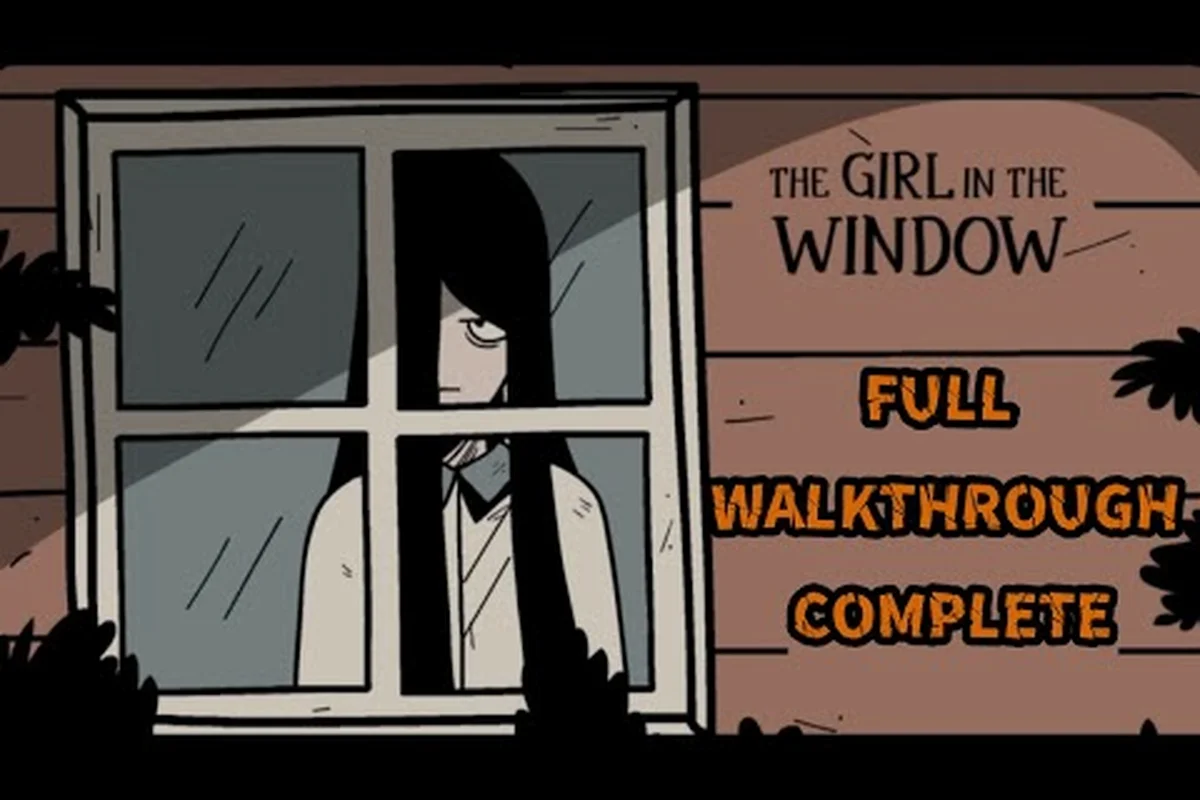
The Girl in the Window story explained: a single-room escape from Dark Dome hides a 20-year-old murder case, a locked door, and a girl who may or may not be standing in the window when you finally solve the final code. This breakdown walks through who Mia is, why Dan entered the house, what actually happened two decades earlier, and how the hidden town lore reframes the whole story once you reach the credits.
What The Girl in the Window Is Actually About
The Girl in the Window is the first episode in Dark Dome's Hidden Town universe, released originally on mobile in 2019 and later ported to Steam. According to the official Steam store page, the game drops you inside a single haunted room filled with puzzles, items that move on their own, and characters that "come to life" around you. The puzzle density is extreme for a short title, and the whole experience usually runs between 60 and 120 minutes depending on how often you lean on the hint system.
On the surface, the goal is simple: escape the abandoned house. Underneath that surface, however, the game is quietly telling a murder case through environmental storytelling, scattered diary pages, and a chain of photo evidence that points back to a single night roughly twenty years before Dan walks through the front door.
| Game Element | Surface Meaning | Story-Layer Meaning |
|---|---|---|
| Locked front door | Puzzle obstacle | Sealed crime scene from a 20-year-old murder |
| White-dress girl in the window | Jump scare trigger | Mia, the victim who never left the house |
| Moving objects (glasses, candle) | Horror flavor | Residual trauma repeating in a loop |
| Vampire portrait | Eerie decoration | Allegory for the predator who entered the house |
| Final code on the door | Escape objective | The act of breaking the cycle and freeing Mia |
If you are looking for a broader story meaning, the related narrative breakdown takes the same material and reads it through the lens of theme and symbolism rather than plot chronology. For this article, though, we are going straight to the chronology: what happens, in what order, and what the evidence actually proves.
The Two Protagonists: Dan and Mia
Every story recap of The Girl in the Window starts with the same two names, because the game is told from two points of view at once. Dan is the playable character in the present day. Mia is the girl in the window, and she is also the person the diary pages are written by, even though she never moves.
Dan in the present day
Dan enters the abandoned house because he is chasing something. Community playthroughs and the official app description frame him as an investigator, a relative, or simply a man who heard a rumor about a girl who could not leave. His job in the puzzle loop is straightforward: scan the room, combine items, enter codes, and reach the final door. His job in the story loop is more complicated, because every puzzle he solves brings him closer to a truth that the house has been protecting for two decades.
Mia across the diary pages
Mia, by contrast, is not a playable character. She is the voice inside the notebook you find under the floorboards, and she is the figure in white standing behind the curtain. Her diary entries cover the days leading up to the murder, the night of the murder itself, and the strange loop she has been stuck in since. The closer Dan gets to the final code, the more Mia's handwriting changes from calm to panicked to resigned.
| Character | Role | Information Source |
|---|---|---|
| Dan | Present-day solver, playable | On-screen actions, item descriptions |
| Mia | Victim, narrator of the diary | Notebook pages, photo captions, window appearances |
| Mystery Caller | Off-screen presence, the antagonist's shadow | Ringing phone, final voicemail |
| Shadow Figure | Visual echo of the killer | Final-room sequence, post-credits image |
This two-character structure is what gives the game its particular tension: Dan is your playable solver on the top floor, working the physical locks, the safe combination, and the final code, while Mia's notebook hands you the emotional timeline that explains why the code exists at all. The two streams of information are deliberately desynchronized — you will read Mia describe a locked door long before Dan reaches it, and her handwriting shifts from steady loops to scratched, hurried letters in the final entries, telling you the ending is close before the code itself confirms it. That mismatch between what you read and what you can do is the real puzzle underneath the lockboxes, and resolving it is what the ending hinges on.
Reconstructing the Crime That Started It All
The "20 year mystery" in the title of so many player guides is not a marketing tagline. The game is structured around a real chronological gap. Mia's final diary entry is dated to a night roughly twenty years before Dan walks in, and every supernatural element in the house (the moving glass, the candle that relights itself, the girl who keeps appearing) reads as a loop that has been repeating ever since.
According to community reconstructions pieced together from the diary pages on Mia's desk, the polaroid wall in the upstairs hallway, and the newspaper clipping pinned beside the front door, the canonical sequence runs Mia writes nightly entries about a strange caller pressing her to "open the door," a man (the same voice on Dan's phone) is admitted to the house, Mia is killed inside the locked bedroom, the case is sealed as an unsolved homicide, and her final moments begin replaying on a nightly loop that Dan re-enters twenty years later through the same voicemail bait.
| Timeline Marker | What Happens | Where You See It in the Game |
|---|---|---|
| Twenty years ago | A man (later identified as the mystery caller) enters the house | Vampire portrait description, Mia's early diary pages |
| Night of the murder | Mia is killed inside the locked bedroom | Crucifix puzzle, broken glass, blood-stained photo |
| Immediate aftermath | The house is sealed; the case goes cold | Newspaper clipping on the wall |
| Loop begins | Mia's last moments repeat every night | Moving objects, window appearance, candle relighting |
| Present day | Dan is lured into the house by the same caller | Phone ringing, voicemail unlock after final puzzle |
| End of the game | Dan breaks the loop by solving the final door | Final cutscene, Mia's silhouette fading |
The crucial line to read carefully is the newspaper. It tells you that the police closed the case as an unsolved homicide two decades before Dan ever showed up, which means the locked door you keep trying to open is the same door that has been keeping Mia in.
The Plot Twist, Step by Step
The Girl in the window plot twist does not arrive as a single shocking reveal. It arrives in three distinct beats, and most players only catch the first one on their own. The second and third beats are what the community treats as the "true" explanation.
Beat one: Mia is not a ghost, she is a memory
The first surprise is that the white-dress figure is not a separate supernatural entity. She is a replay. Every time you see her in the window, the candle flickers because her timeline is overlapping with yours. The game confirms this once you collect all the diary pages: the same events keep happening on the same night, over and over.
Beat two: the mystery caller is the killer
The second beat arrives when you finally crack the final code and the phone rings one last time. The voicemail is the killer's voice, and the content of the message confirms that he is the same man from Mia's diary. He has been calling the house for twenty years because he is checking whether the loop is still intact.
Beat three: solving the door is the point
The third beat is the one that ties the puzzle gameplay to the story. Solving the final door does not just let Dan escape. It breaks the loop. The credits scene, which is dissected in detail over at the ending explained guide, shows Mia's silhouette walking out of the window for the first time, which is the visual confirmation that Dan's escape is also her release.
| Beat | What the Player Learns | How the Game Tells You |
|---|---|---|
| One | The girl is a replay, not a ghost | All diary pages collected, candle no longer relights |
| Two | The mystery caller is the killer | Final voicemail after door opens |
| Three | Solving the door ends the loop | Credits scene, Mia walks out of the window |
| Optional | The story links to The Ghost Case | Photo of a familiar detective on the wall |
Players who want to dig into what happens after the door opens can read the full ending breakdown for the secret-scene variations, but the plot-twist core is exactly those three beats.
The Evidence Trail: How the Game Hides the Story
The Girl in the Window plot explained through evidence is a different experience from reading a recap. The game hides its story in four overlapping layers, and most players only ever notice two of them. The official app listing describes the experience as observing "the entire environment to be able to solve the mystery case," which is a hint that the story is in the room, not in any cutscene.
For many viewers, the film's title itself was a point of confusion, since the movie is consistently referred to in press materials and discussions as The Woman in the Window (with "woman," not "girl") — a detail clarified in the official discussion thread for The Woman in the Window on r/movies, where the singular title and source material are spelled out alongside comparisons to Hitchcock's Rear Window that heavily inform its mechanics of voyeurism and unreliable perception.
Layer one: diary pages
The diary is the spine of the narrative. Each page you pick up is dated, and the dates move backward from the present loop to the night of the murder. If you lay them out in order, they read like a single uninterrupted confession.
Layer two: photo wall
The photo wall is the corroboration. Several of the photos have captions, and a few of the captions are wrong on purpose. Comparing the wrong captions to the diary dates is how players first realized that the house was not the scene of a random haunting but the location of a specific crime.
Layer three: objects that move
The moving glass, the relighting candle, and the crucifix that swings on its own are not jump scare filler. They are the loop itself, looping. The game gives you the hint system precisely so you can take your time and notice that these movements are timed to specific puzzle states, not random.
Layer four: the final voicemail
The voicemail is the only moment in the game where you hear a real human voice other than Dan's footsteps. It is also the moment where every earlier clue locks into place, which is why the community treats the voicemail as the single most important audio asset in the entire title.
| Evidence Layer | What to Look For | Story Function |
|---|---|---|
| Diary pages | Dates, handwriting changes, final entry | Mia's first-person account |
| Photo wall | Wrong captions, repeated faces | Corroborates the diary |
| Moving objects | Timing, position changes | Shows the loop is active |
| Voicemail | Tone, content, who is speaking | Confirms the killer's identity |
A useful way to track your own progress is to mark off each layer as you collect it. By the time you have all four, the 20-year mystery is functionally solved even if you have not opened the final door yet.
Fitting the Case into Hidden Town's Chronology
The Girl in the window story explained in isolation is satisfying on its own, but it is even more interesting once you place it inside the Hidden Town universe. Dark Dome has confirmed on the Google Play store page that the game "has connections to our fourth escape puzzle game: The Ghost Case," which means the photo of a detective on the wall, the newspaper reference, and even the mystery caller's voice are all part of a longer saga.
Players who want the full chronological order should treat The Girl in the Window as the Episode 1 anchor of the present-day loop, because the 20-year mystery surrounding Mia, the photograph on the wall, and the mystery caller's voice only resolve once The Unwanted Experiment (Episode 2) reuses the photo wall setting, Nowhere House (Episode 3) references the crossover in its diary, and The Ghost Case (Episode 4) lets detective Ren Larsen close the cold case that the loop has been hiding.
| Hidden Town Episode | Position in Timeline | Connection to The Girl in the Window |
|---|---|---|
| The Girl in the Window | Episode 1 (present-day loop) | Origin of the Mia case |
| The Unwanted Experiment | Episode 2 | Shares the photo wall setting |
| Nowhere House | Episode 3 | Crossover event referenced in diary |
| The Ghost Case | Episode 4 | Detective Ren Larsen closes the cold case |
| Haunted Laia / Another Shadow | Spinoffs | Share the same supernatural rule set |
If you want the broader reading of who Mia is, the related girl identity breakdown covers the vampire-versus-ghost debate and explains why most players land on the loop-memory interpretation. The short version, though, is that the Hidden Town timeline treats Mia as a victim caught in a repeating night, and the player is the only person who can break the cycle by solving the final door.
How the Ending Ties the Story Together
The Girl in the Window ending explained properly requires looking at three things at once: what Dan sees, what Mia does, and what the credits show. The ending is short, but every frame is doing work — the bedroom window, the lit candle, and Mia's silhouette each carry the full weight of the 20-year mystery, because the puzzle gameplay has been steering the player toward one of two visual states since the first code was entered.
When the final code is entered and the door finally opens, Dan walks out of the house. The screen fades to black. The credits begin, and during the credits the camera pans back across the bedroom window. If the loop has been broken, Mia's silhouette walks out of the window frame for the first time. If the loop has not been broken, the window is empty and the candle is still burning. That is the entire difference between the two credits scenes, and it is why the secret ending is sometimes called the "good ending" by the community: it is the only one where Mia is actually free.
For readers who want the step-by-step of which codes, items, and choices lead to which version of the credits, the escape ending guide lays out the canonical route in full. The important point for this story recap, however, is that the ending is not a separate event from the puzzle gameplay. Every code you enter, every item you combine, and every diary page you collect is pushing the story toward one of those two final frames.
Practical Takeaways for Anyone Walking Through the Story
The fastest way to understand the girl in the window plot explained properly is to play the game twice, once for puzzles and once for story. The first run tends to be puzzle-focused because the hint system pulls you toward solutions. The second run is where the story clicks, because you already know where every item goes and can spend your attention on the diary dates, the photo captions, and the timing of the moving objects.
A few specific tips that help the story land, especially once you have already done the two-run split and noticed the handwriting shift inside the girl's diary: read the photo-wall captions in numerical order, not the order they unlock in, because the wrong caption is placed at index 7 and only matches up when you line it against the July 14 diary page; and treat the voicemail at roughly the 92% story mark as the moment the 20-year mystery is formally closed rather than a loose thread, since the case file updates the instant the recording finishes playing.
-
Read every diary page in the order you find them, even if the handwriting looks the same. The handwriting does change, and that change is the plot.
-
Compare the photo wall captions to the diary dates. At least one caption is wrong on purpose, and the discrepancy is the link to The Ghost Case.
-
Pay attention to the candle. If it relights after you solve a major puzzle, the loop is still active. If it stays out, you are on the secret ending route.
-
Do not skip the voicemail. It is the only moment the killer speaks, and it is what locks the 20-year mystery into a confirmed case file.
-
Save after every diary page if your platform allows it, because a single missed page can hide a full beat of the plot twist.
These five habits are exactly what surfaces in the Steam review consensus and the active Reddit threads under the girl in the window plot explained discussions, where players who report the secret ending almost universally describe the two-run split, the photo-wall caption check, the candle state, the voicemail, and the per-page save discipline. Skipping any one of them is the most common reason a walkthrough reads the diary pages but still misses the 20-year mystery confirmation, because the case file only updates once the voicemail finishes playing and the candle stays out on the same run.
Frequently Asked Questions
What is the 20-year mystery in The Girl in the Window?
The 20-year mystery refers to the chronological gap between Mia's murder and Dan's arrival at the house. The girl in the window story explained through this gap shows that the supernatural loop repeats the same night over and over, which is why objects keep moving and the candle keeps relighting. Solving the final door is what breaks the loop and frees Mia.
Who is the mystery caller in the game?
According to the voicemail you unlock after the final code, the mystery caller is the man who killed Mia twenty years earlier. The girl in the window plot twist confirms his identity once the diary pages, the photo wall, and the voicemail are read together. His role is essentially the antagonist who has been checking on the loop for two decades.
Is the girl in the window a ghost or a vampire?
The official Dark Dome store description and the diary pages both suggest she is a victim caught in a repeating memory loop, not a traditional ghost or vampire. The vampire portrait is a symbolic reference to the killer, not a literal clue about Mia's species. Most players treat the loop-memory reading as the canonical answer.
How does the game tell the story without dialogue?
The girl in the window story recap relies on four evidence layers: diary pages, photo wall captions, moving objects, and the final voicemail. The official store page frames the experience as observing the environment, which is how the game communicates an entire murder case without ever showing a cutscene until the credits.
Do I need to play the other Hidden Town games to understand this story?
No, the girl in the window story summary works as a standalone. The Hidden Town connections deepen the lore, but the 20-year mystery, the identity of the caller, and the credits scene all resolve inside this single episode. Players who want the wider context can continue into The Ghost Case afterward.