
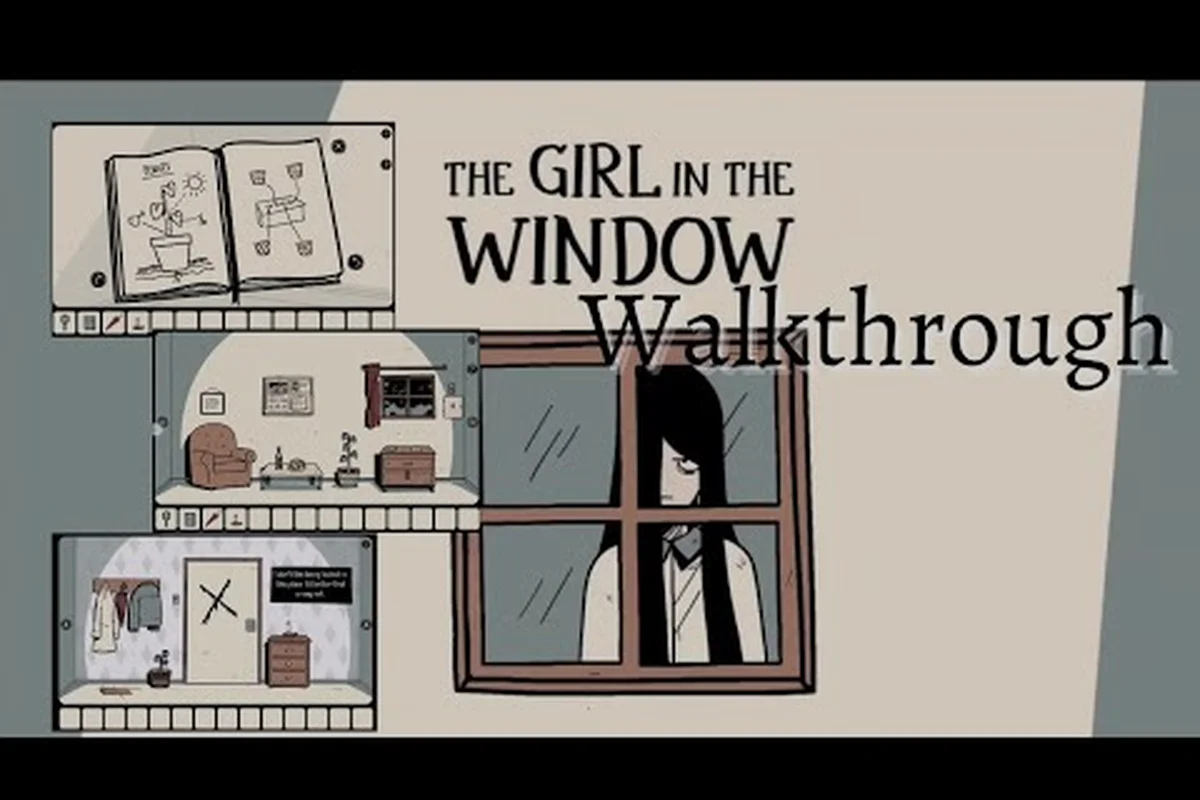
The Girl in the Window hints system rewards curiosity before it rewards cleverness, and knowing when to spend a nudge often decides whether you finish a chapter in twenty minutes or in two sittings. If you have been staring at a fuse box or a padlock and wondered whether tapping that little lightbulb icon is going to ruin the puzzle, this breakdown walks through exactly how the hint layer behaves, what each tier of hint actually reveals, and the moments where spending one is a better trade than brute-forcing the room.
Hiding inside a haunted house full of locked drawers, glowing symbols, and reflective glass, the Girl in the Window escape game never tells you outright that it is built on a layered hint economy. You discover it the first time a tile stays still and a soft prompt floats onto the screen asking if you want a clue. Understanding that economy early lets you budget your hints like a resource, which is the difference between breezing through the second chapter and grinding against the same cabinet for forty minutes.
What the Nudge Button Really Tells You
The hint system in The Girl in the Window is built around three layers, and each layer peels back only as much information as you ask for. Players who never tap the lightbulb still get subtle nudges in the environment, while players who tap it once get a directional pointer, and players who tap it twice get a near-solution. The design philosophy is to keep the puzzle itself intact while removing the frustrating blank-wall moments that usually kill momentum in escape-room games.
The Three Hint Tiers Explained
The first tier is the ambient hint, which arrives without any player action. When you hover or interact with the wrong object three or more times, the screen will gently pulse a soft glow on a related object elsewhere in the room. According to community testing, this tier is purely directional and never reveals what to do with the object, only where to look next.
The second tier is the directional hint, triggered by tapping the lightbulb icon once. The game will display a short text clue such as "Try rotating the tiles in a clockwise sequence" or "Look at the reflection on the wall." This is the most popular tier because it gives you a method without giving you the answer.
The third tier is the solution hint, triggered by tapping the lightbulb icon a second time within a short window. The text changes to a near-complete walkthrough of the current puzzle, such as "Set the dials to 7, 3, 2, 9." Community data reports that this tier will close itself after about ten seconds if you do not confirm, preventing accidental over-revealing.
| Hint Tier | Trigger | What It Reveals | Best Use Case |
|---|---|---|---|
| Ambient | 3+ wrong interactions | Glow pulse on related object | When you feel lost but want to stay in puzzle mode |
| Directional | 1 lightbulb tap | Text method or focus point | When you know the area but not the mechanic |
| Solution | 2 lightbulb taps within window | Near-complete answer | When stuck for 5+ minutes and losing focus |
Free Hints vs Ad-Based Hints
The free version of The Girl in the Window serves hints through a short rewarded ad, while the premium version unlocks all hints directly without interruption. According to the official Google Play listing, the premium tier also unlocks a secret scene with extra riddles inside Hidden Town, which means spending on the upgrade rewards you with both convenience and additional content.
The ad-based model is not punitive, but it does introduce a small cost in flow. Each hint requires watching a fifteen to thirty second ad, which adds up over a long play session. If you are streaming or recording the game, those ad interruptions also break the visual continuity of the playthrough. Players who run the game on PC through an emulator, such as the BlueStacks listing, can sidestep this issue entirely because the emulator handles ads without breaking the gameplay window.
When to Spend a Hint vs When to Keep Thinking
Knowing when to use a hint is more important than knowing how to use one. Spend too early and the puzzle never gets a chance to teach you the language of the room. Spend too late and frustration bleeds into the next chapter, making the second puzzle feel harder than it actually is. The Girl in the Window difficulty curve is steep but fair, and the hint system is tuned to that curve, which is why learning the rhythm of spending matters as much as the spending itself.
The Five-Minute Rule
Community walkthroughs and player discussion threads consistently recommend the five-minute rule as a hint-spending heuristic. If you have interacted with every interactive element in the room and still have not identified a single next step after five minutes, that is the moment to spend a directional hint. The five-minute window is long enough to cover a thorough sweep of drawers, books, and hidden compartments, but short enough that you are not punishing yourself for a momentary lapse of attention.
The five-minute rule also protects against one of the most common mistakes new players make: thinking they are stuck when they have actually missed a single object on a shelf. Many early-game puzzles only require a missing prop rather than a missing insight, and a quick second sweep often resolves what felt like a dead end. Treat the timer as a checkpoint, not a deadline.
Recognizing Puzzle-Block vs Attention-Block
The Girl in the Window is it hard partly because the game has two distinct types of stuck moments. A puzzle-block happens when you understand the room but cannot solve the logic: you can see all four symbols, you know the padlock expects an order, but you cannot figure out which order. A attention-block happens when you have missed an object, overlooked a reflection, or never opened a particular drawer. These two blocks demand opposite hint strategies, and using the wrong hint for the wrong block is what turns a ten-minute solve into an hour.
| Stuck Type | Symptom | Hint Tier to Spend | Why This Tier |
|---|---|---|---|
| Puzzle-block | All objects found, logic unclear | Directional hint | Gives you a method without spoiling the answer |
| Attention-block | Feeling like something is missing | Ambient glow only | A directional hint will confuse you because the issue is not the logic |
| Hard-stuck | Both blocks present | Solution hint | Reset your focus and let the next chapter breathe |
The directional hint is wasted on an attention-block because the hint will describe logic you already understand while the missing object stays missing. Conversely, the solution hint is overkill on a pure attention-block because once you find the missing object the puzzle tends to unfold on its own.
How Puzzle Difficulty Scales Across the Chapters
The Girl in the Window difficulty is not linear. Chapter 1 leans on observation and simple combinatorial logic, Chapter 2 introduces symbol-to-symbol translation puzzles, and Chapter 3 layers in multi-stage puzzles where solving one lock feeds into the next. Players who try to brute-force Chapter 3 the same way they played Chapter 1 often burn through their hint budget inside the first room and hit a wall.
According to community walkthrough data on the GameFAQs guide by jimfish, the fuse box puzzle early in the game is a clean introduction to the rotation-tile mechanic, while later padlock puzzles require reading the reflection of glowing symbols on the wall. Each new mechanic is introduced in a tutorial-like room before the game ramps up the complexity, which means paying attention in the first room of each chapter usually pays off two or three rooms later.
Chapter-by-Chapter Difficulty Snapshot
| Chapter | Puzzle Types | Average Stuck Time | Hint Spending Recommendation |
|---|---|---|---|
| Chapter 1 | Rotation tiles, basic padlock | 3-6 minutes per puzzle | 1 directional hint per puzzle max |
| Chapter 2 | Symbol translation, mirror reflections | 5-12 minutes per puzzle | 1 directional + 1 solution per chapter |
| Chapter 3 | Multi-stage, layered combinations | 8-20 minutes per puzzle | 1 solution hint for the first multi-stage, then directional for the rest |
| Hidden Town (premium) | Hidden object + riddle chains | 4-10 minutes per puzzle | Ambient hints only, save solution for the finale |
The averages here are drawn from player reports and walkthrough timing, so your personal playtime may differ depending on how naturally the symbol-to-symbol translation clicks for you. Players who enjoy classic escape-room logic tend to settle into Chapter 2 quickly, while players more familiar with hidden-object games sometimes struggle with Chapter 3 because it demands both observation and combinatorial logic in the same room.
Reading the Game's Controls and Interface Before You Need Hints
The Girl in the Window controls are simple on paper, but a few gestures can shave real seconds off your interaction time, and small speed gains add up across a multi-hour session. On mobile, you tap to interact, swipe to rotate the camera, and pinch to zoom on detailed objects. On PC through an emulator, mouse and keyboard map to the same gestures with cursor precision that mobile taps cannot match.
The lightbulb hint icon is located in the top-right corner of the screen, and it does not appear until the game has decided you need it. The icon fading in is itself a signal that the game has registered a few failed interactions, which is a soft cue to take a breath and start your five-minute timer. Once you tap it, the hint text appears in a translucent overlay that you can dismiss without losing progress, and re-tapping within the window expands the overlay into the solution tier.
| Control | Mobile | PC (Emulator) | Best Practice |
|---|---|---|---|
| Interact | Single tap | Left click | Tap edges of objects first, then center |
| Rotate camera | One-finger swipe | Right-click drag | Slow swipes reveal more reflective surfaces |
| Zoom | Pinch | Mouse wheel | Always zoom on reflective surfaces and padlocks |
| Hint button | Top-right lightbulb | Top-right lightbulb | Wait for the icon to fade in before tapping |
Players who want a deeper walkthrough of the save system and the touch-vs-mouse trade-off can check the Girl in the Window save and controls guide for a side-by-side comparison.
Why Camera Control Matters More Than You Think
Several of the most-missed puzzles in the game depend on reflections, and reflections only register when the camera is angled correctly. Players who swipe quickly past reflective surfaces often solve a puzzle in five minutes while a friend solving the same puzzle takes twenty, simply because the friend rotated the camera more slowly. If you are stuck on a puzzle that involves glowing symbols and a padlock, slow your camera rotation down to a crawl and watch every wall surface for the moment a reflection appears. The reflection is the actual puzzle input, and the symbols on the wall are the actual puzzle output, and missing either one will block the answer no matter how many hints you spend.
If a particular puzzle type consistently trips you up, the Girl in the Window number and code puzzles guide breaks down the most common translation patterns with worked examples.
Total Playtime and How Hints Affect Your Session Length
The Girl in the Window playtime sits between two and a half and four hours for most players on a first run, and hint spending is one of the largest variables in that range. Players who never tap the lightbulb and brute-force every puzzle tend to land at the four-hour end, while players who spend directional hints liberally often finish in just over two hours. The premium Hidden Town chapter adds another thirty to forty-five minutes on top of the base game.
According to community playtime trackers and the TalkAndroid complete walkthrough, the average first-time run is closer to three hours when hint spending is balanced. Players on a second run, who already know the symbol translation rules, often cut that down to ninety minutes because the heavy Chapter 3 puzzles suddenly feel like pattern recognition instead of new mechanics.
Hints as a Playtime Lever
The relationship between hint spending and total playtime is not strictly inverse. Spending too many hints can paradoxically lengthen the game, because solution hints sometimes spoil puzzles you would have solved in another minute, and the resulting loss of momentum means you start the next room with less focus. The cleanest playtime benefit comes from spending directional hints at the five-minute mark and reserving solution hints for the chapter's hardest multi-stage puzzle, where a single solution hint can save you twenty minutes of compound frustration.
| Hint Spending Style | Estimated Playtime | Puzzle Retention |
|---|---|---|
| Zero hints (brute force) | 3.5-4.5 hours | High, but frustration can be high too |
| Directional only | 2.5-3.5 hours | Medium-high, you still solve the logic yourself |
| Directional + 2-3 solution hints | 2-2.5 hours | Medium, the hardest rooms are essentially revealed |
| Solution hints liberally | 1.5-2 hours | Low, more viewing than solving |
If you want additional quick tips on pacing your runs, the Girl in the Window interactive items and quick tips guide pairs well with the hint-spending strategy above, because managing which objects you touch and when is just as important as managing which hints you spend.
Frequently Asked Questions
Does spending a hint in The Girl in the Window lock you out of any achievement?
No, the hint system does not gate any achievements. According to the official store page and community confirmation, every chapter can be completed with unlimited hints without losing unlockable content, including the secret Hidden Town scene in the premium version.
Is The Girl in the Window hard for players new to escape-room games?
The Girl in the Window is it hard question depends mostly on your tolerance for symbol-translation puzzles. The first chapter is approachable for anyone who has played a hidden-object game, but Chapter 3 raises the difficulty sharply with multi-stage combinations. New players who lean on directional hints for the first two chapters tend to clear the game without major frustration.
How long does The Girl in the Window take to finish on a first playthrough?
The Girl in the Window playtime averages around three hours for a first run with balanced hint spending, with the range stretching from two and a half to four hours depending on how often you tap the lightbulb. The premium Hidden Town chapter adds another thirty to forty-five minutes, and full achievement hunting typically pushes a second run to two hours.
Can I play The Girl in the Window with mouse and keyboard instead of touch?
Yes, the game runs smoothly through PC emulators like BlueStacks, and the touch-based controls map to mouse clicks and swipes. Mouse precision is often faster than touch for inspecting small reflective surfaces, and the wider screen makes it easier to spot the reflections that drive the padlock puzzles, which is one reason PC players often report shorter total playtime.
Should I watch a full walkthrough before playing, or play first and check hints only when stuck?
Playing first and using the in-game hint system is the better experience because the layered hint design rewards you for engaging with the room. Walking through the walkthrough video by Super Anding after you finish is a great way to compare your solve order against the community approach, but reading a full solution upfront removes the puzzle language that makes the game satisfying in the first place.