
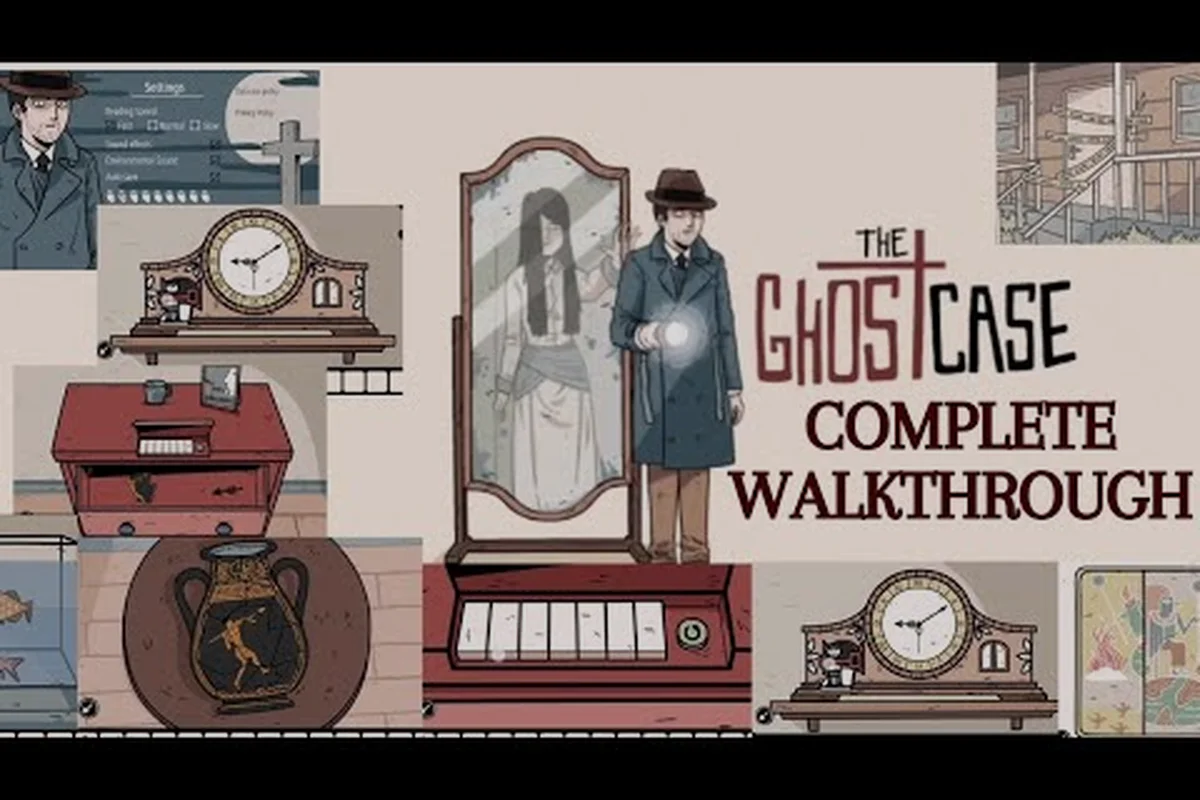
Dark Dome Beyond the Room is the eighth entry in the Hidden Town escape game saga, and it sits at a strange crossroads: it is both a self-contained point and click horror story about a young medium named Darien and a connective thread that ties the wider Dark Dome universe back to the abandoned house where The Girl in the Window first began. If you have been chasing the Hidden Town lore through games like The Ghost Case, Nowhere House, and Haunted Laia, this is the chapter that finally closes a loop. If you are simply hunting for the best escape room games PC players keep recommending, this one is also a strong candidate, sitting comfortably alongside cult favorites in the games like Rusty Lake tier. Below is a complete breakdown of what Dark Dome Beyond the Room is, how its story connects to the rest of the series, and where Hidden Memories fits into the bigger picture.
What Dark Dome Beyond the Room Actually Is
Dark Dome Beyond the Room is a single-room point and click escape game developed by the Peruvian indie studio Dark Dome. According to the official Dark Dome studio site, it is billed as the eighth installment in the series and is described as an interactive adventure full of puzzles, riddles, and supernatural dread. The game launches the player into a building in Hidden Town that has been abandoned for six years, with neighbors whispering about rituals, witchcraft, and murders.
You play as Darien, a young man with a sensitivity to the paranormal, who enters the building to investigate a recent disappearance. Within minutes the door locks behind him, the lights flicker, and you are left with a hand-drawn 2D room, an inventory, and roughly four to five hours of dense puzzle work. The game follows the same template that fans of the series have come to expect from point and click escape games: tap or click to explore, combine inventory items, decode symbols, and unravel a slow-burn mystery rather than chase jump scares.
Core Design Pillars
| Pillar | How It Shows Up in Beyond the Room | Why It Matters for Players |
|---|---|---|
| Single-room structure | One abandoned apartment with several sub-areas (kitchen, bedroom, ritual room) | Keeps the focus on inventory logic instead of navigation |
| Random symbol puzzles | Symbols and number codes reshuffle every save | Rewards logical deduction over memorization |
| Light horror atmosphere | Whispered voices, moving objects, a shadow figure in the mirror | Stays suspenseful without relying on jump scares |
| Hint system | Built-in hint coin economy for stuck players | Removes frustration that usually kills point and click horror games |
| Lore cross-references | Photo of Mia, references to the case file from The Girl in the Window | Connects the chapter to the wider Hidden Town saga |
How It Compares to Classic Escape Room Games PC
If you are building a shortlist of escape room games PC players consistently recommend, Dark Dome Beyond the Room deserves a slot next to the obvious benchmarks. The hand-drawn art, the symbolism-driven puzzle logic, and the creeping dread are all hallmarks of the games like Rusty Lake mold, but the single-room format keeps the experience tight. The complete walkthrough scene counts hover around nine discrete puzzles, which puts it on the shorter end of the spectrum but high on atmosphere. For a deeper look at the broader Hidden Town timeline, the Hidden Town series order guide maps every entry and how they connect.
The Story: Darien, the Abandoned Building, and the Loop Back to The Girl in the Window
The narrative of Dark Dome Beyond the Room runs in two layers. The surface layer is a straightforward missing-person investigation. Darien is contacted by a frantic friend whose sibling, a local student named Nora, has vanished after entering the abandoned building on the edge of Hidden Town. The deeper layer is a metaphysical loop that closes a thread opened in The Girl in the Window, the very first game in the saga.
According to community wiki notes and the Dark Dome Steam store page for Beyond the Room, the building Darien explores used to house a woman named Vivienne Marlow, who conducted séance-style rituals in the 1970s. Her experiments allegedly opened a thin spot in Hidden Town that still pulls in sensitive passersby, which is why a teenage girl once appeared in the window of a house that had been abandoned for twenty years. That earlier incident is the inciting event of the saga's first chapter, and the photo of that girl is one of the central clues Darien uncovers in the second act of Beyond the Room.
Chapter-by-Chapter Spoiler Map (Light)
| Chapter | Setting | Core Discovery | Saga Connection |
|---|---|---|---|
| Prologue | Darien's apartment, phone call | Missing-person briefing, supernatural warning | Echoes the setup of The Girl in the Window |
| Act 1 | Building entrance, hallway | Locked doors, ritual chalk marks | Ties to Vivienne Marlow séance backstory |
| Act 2 | Main ritual room | Séance tools, family photo, encoded diary | Reveals Mia was not the only girl pulled into the building |
| Act 3 | Hidden basement | Mirror ritual, confrontation with entity | Closes the loop from the saga's opening chapter |
| Epilogue | Darien leaves at dawn | Nora is rescued, Darien loses a piece of himself | Sets up Hidden Memories and later Hidden Town chapters |
The ending is the emotional payoff for anyone who played the saga in order. Darien learns that the entity haunting the building is a fractured echo of the same force Mia was tethered to in the first game, which means the Dark Dome team quietly built a recurring antagonist years before the player ever meets them in The Ghost Case or Haunted Laia.
Hidden Memories and the Other Side of the Coin
Fans often treat Dark Dome Hidden Memories as a sister chapter to Beyond the Room, but mechanically and narratively they sit in different slots. Hidden Memories is the second Hidden Town entry and focuses on Lucian Marlow, the estranged son of Vivienne Marlow, who returns to Hidden Town to clear out his late mother's estate. The game is shorter, more linear, and far more melancholy than Beyond the Room, leaning on family trauma and a quiet supernatural presence instead of a locked-room mystery.
Side-by-Side Comparison
| Attribute | Dark Dome Beyond the Room | Dark Dome Hidden Memories |
|---|---|---|
| Series position | Episode 8 | Episode 2 |
| Protagonist | Darien (paranormal investigator) | Lucian Marlow (returning son) |
| Setting | Single abandoned apartment with ritual room | Mother's house with scattered memory tokens |
| Tone | Suspenseful, ritual horror | Melancholic, grief-driven |
| Puzzle focus | Symbol decoding, inventory combination | Memory reconstruction, dialogue choices |
| Saga relevance | Closes The Girl in the Window loop | Seeds the Marlow family thread for later entries |
| Best for | Fans of point and click horror games | Fans of narrative point and click escape games |
| Approximate playtime | 4 to 5 hours | 1.5 to 2 hours |
The two games work as a balanced pair. Beyond the Room delivers the long-form locked-room experience that point and click horror fans crave, while Hidden Memories offers a tighter, story-first experience that you can finish in an evening. If you want a fuller Hidden Town arc, the Dark Dome games in order guide breaks down where each episode fits narratively and mechanically.
Pacing, Puzzles, and Difficulty Curve
For a game billed as a single-room escape, Beyond the Room packs a surprising amount of mechanical variety. There are nine hand-crafted puzzles, each gated behind a layered logic chain rather than a single observation moment. The pacing follows a familiar Dark Dome rhythm: a small tutorial-style puzzle in the first ten minutes, a mid-game inventory bottleneck that forces you to backtrack, and a finale that combines two or three earlier solutions in a final ritual sequence.
Puzzle Types at a Glance
| Puzzle | Type | Logic Required | Likely Bottleneck |
|---|---|---|---|
| Front door mechanism | Mechanical | Pattern recognition, motor rotation | Players miss the gear behind the wallpaper |
| Chalk symbol order | Symbolic | Color, shape, and position | Symbols reshift each save; logic only |
| Séance mirror | Environmental | Light angle and reflection | Requires previously crafted candle item |
| Diary cipher | Cryptographic | Letter-to-symbol substitution | Handwriting varies; look for shape, not letter |
| Fuse box wiring | Electrical | Trial and error plus deduction | Two switches are decoys |
| Basement padlock | Numerical | Final three-digit code derived from act 2 | Players try to brute force; logic required |
| Final ritual | Combined | Synthesis of earlier puzzle solutions | The most missable item is a small brass key |
The difficulty curve is moderate. Players who have already completed The Girl in the Window or The Ghost Case will breeze through the symbol puzzles because they have seen the Dark Dome logic before. Newcomers diving in as their first point and click escape game will hit a wall on the fuse box, and that is exactly where the built-in hint system earns its keep. The hint system hands out a small number of coins for every room you explore, which you can spend for a layered hint that escalates from atmosphere to exact solution.
Where Beyond the Room Fits in the Broader Hidden Town Saga
One of the most common questions from new players is whether Dark Dome Beyond the Room can be played in isolation. The short answer is yes. Each Dark Dome game is self-contained, which the official Steam page explicitly states, but the experience changes dramatically depending on context. A player meeting Hidden Town for the first time will enjoy a satisfying one-room horror escape. A player who has already walked through The Girl in the Window will pick up on the recurring motif of a girl at the window, the shared photograph, and the specific line of dialogue that quotes Mia word for word.
Recommended Play Order for Newcomers
| Order | Title | Why Play It Here |
|---|---|---|
| 1 | The Girl in the Window | Introduces Hidden Town, Dan, and Mia |
| 2 | Unwanted Experiment | Establishes the supernatural rules |
| 3 | Nowhere House | Deepens Dan's arc |
| 4 | The Ghost Case | First time you meet Ren Larsen |
| 5 | Haunted Laia | Expands Hidden Town beyond the original house |
| 6 | Another Shadow | Bridges the early and late saga |
| 7 | Escape from the Shadows | Sets up the final ritual arc |
| 8 | Beyond the Room | Pays off the loop from the first game |
| 9 | Hidden Memories (optional) | Best as a side story before or after step 8 |
If you want a quick taste of the saga without committing to all nine chapters, the escape room games PC guide ranks the strongest standalone entries. Beyond the Room consistently lands in the top three for atmosphere and puzzle density, which is why it is often the second or third game newcomers try after The Girl in the Window.
Why the Game Resonates with the Games Like Rusty Lake Crowd
There is a reason point and click horror fans keep drawing the comparison. Rusty Lake built its reputation on surreal single-room escape experiences with symbolic logic and unsettling art direction, and Dark Dome has spent almost a decade quietly building a parallel catalog. Beyond the Room borrows the same one-screen focus, the same obsession with ritual and family trauma, and the same willingness to make the player sit with ambiguity at the end.
Where Beyond the Room carves its own identity is in connective tissue. Most escape room games PC players love are standalone stories, and that is part of their charm. Dark Dome takes the same craft and threads it through a shared universe, which is why fans are willing to forgive the occasional logic stretch. The sense that a small detail in chapter one will pay off eight games later is rare in the genre, and Beyond the Room is the chapter where that long game becomes visible to anyone paying attention.
Tips Before You Start
A few quick pointers will save you the frustration that often turns point and click escape games into a stalled play session.
-
Screenshot every chalk symbol and coded wall. They reshift between saves, so the exact pattern is useless, but the logic behind the pattern is consistent.
-
Talk to NPCs more than once. Dialogues change after major puzzle milestones and unlock new hint coins.
-
Save before every ritual room. The final ritual has multiple outcomes, and your earlier choices change the available dialogue options.
-
Spend hint coins early. The hint system in Beyond the Room is generous, and the hardest puzzles are the late-game ones.
-
Listen to the ambient whispers. The voice lines foreshadow two later Hidden Town entries, which makes a replay more rewarding once you have played the rest of the series.
Frequently Asked Questions
Is Dark Dome Beyond the Room a good starting point for new players?
Yes, because the game is mechanically self-contained and includes a full hint system. The narrative is more rewarding if you have played The Girl in the Window first, but the puzzles and atmosphere work on their own. Plan for roughly four to five hours on a first playthrough, longer if you lean on the hint coins.
How does Dark Dome Hidden Memories connect to Beyond the Room?
Both games are part of the same Hidden Town saga, and both feature the Marlow family. Hidden Memories focuses on Lucian Marlow, the son of the woman whose rituals are referenced in Beyond the Room, which makes it a natural prequel or companion piece depending on the order you play it in.
Is Beyond the Room similar to Rusty Lake in difficulty?
The puzzle logic is comparable, although the inventory combination chains in Beyond the Room are longer. If you finished Rusty Lake: Roots or The White Door without hints, you should be able to clear Beyond the Room with only a small handful of hint coin spends.
Can you play Dark Dome Beyond the Room on Steam Deck?
The PC release runs well on Steam Deck because it is a 2D point and click title with no controller-heavy inputs. Most community reports describe a stable 60 frames per second at medium brightness with the touchscreen controls mapped automatically.
Do I need to play the other Dark Dome games to understand the ending?
No, the ending resolves its own plot threads, but recognizing the references to Mia, the abandoned house, and Ren Larsen's case file will make the final cutscene much more emotional. For the full payoff, working through at least the first three Hidden Town entries is recommended.