
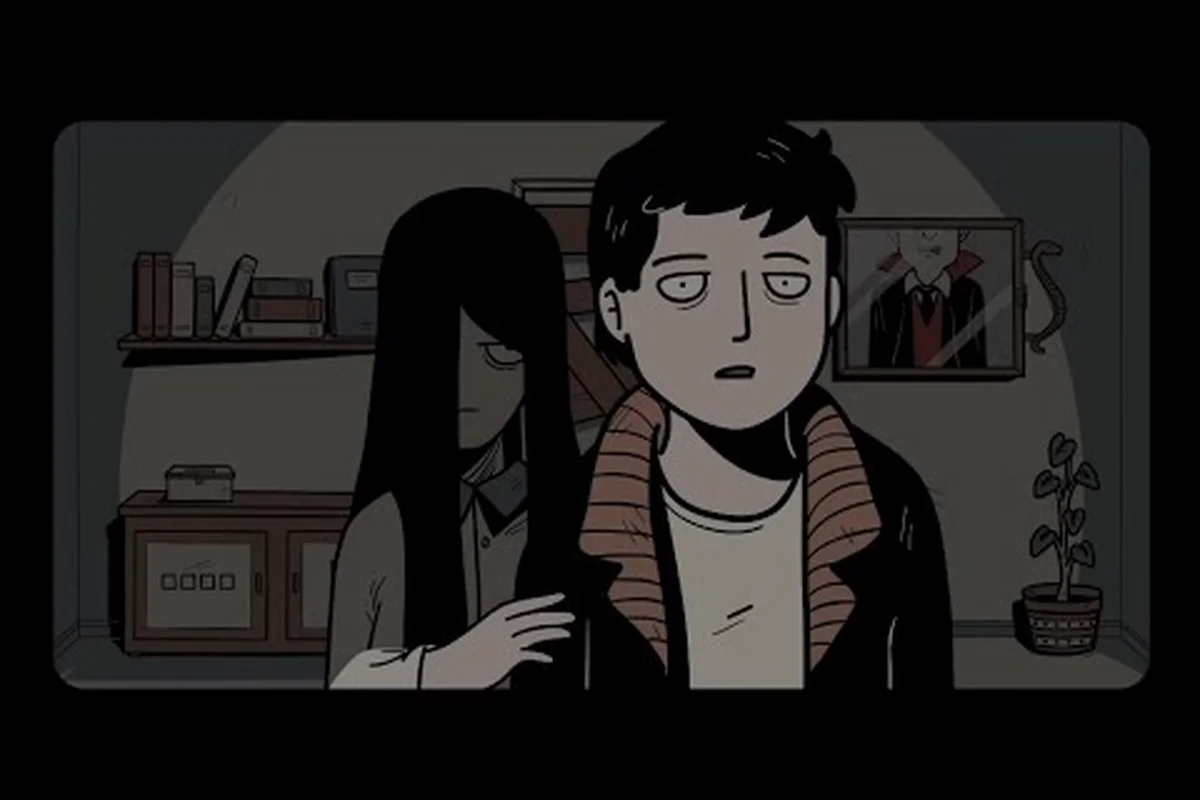
The girl in the window dark dome story is the foundational thread of Dark Dome's Hidden Town universe, and understanding it unlocks every mystery the studio has released since 2019. Before Dan even steps inside the abandoned house, the narrative has already begun layering diary fragments, photo evidence, and faded newspaper clippings that connect the first game to The Ghost Case, the fourth title in the series. Players who piece these fragments together discover a decades-old tragedy that keeps echoing through every chapter, and the symbols players solve in the single room are not random — they map directly onto the Hidden Town timeline. The girl in the window dark dome story matters because it is the entry point to a nine-game saga where every solved puzzle deposits another breadcrumb into a larger Hidden Town conspiracy. Picking out which girl in the window dark dome sequence you actually saw is the first step, and our breakdown of The Girl In The Window Girl Identity traces how each masked appearance locks into the Hidden Town chronology.
Where the Murder Case Began
The House That Started the Saga
The girl in the window dark dome story begins with a single abandoned house on the edge of Hidden Town. According to the official Dark Dome developer site, the village has spent twenty years avoiding the property because villagers keep seeing the silhouette of a girl pressed against one of the upper windows. The protagonist, a teenager named Dan, decides to investigate despite the warnings, and the moment he crosses the threshold the door locks behind him. The player is then trapped in a single densely packed room that hides far more than a missing girl.
The room is the narrative engine of the game. Every object — the dusty diary, the framed photos, the yellowed newspaper clippings, the loose floorboards, the locked cabinet — is a node in the larger Hidden Town lore graph. Because the game is the first title Dark Dome ever published, the studio used this single room to plant every recurring symbol, character name, and date that reappears in later episodes. The developers at Dark Dome Studios, founded in Peru in 2019 by Aldo Mujica and Sandro de la Riva Aguero, designed the game as an on-ramp rather than a standalone, so the house history is intentionally overloaded with setup material for Hidden Town.
| Origin Element | What It Reveals | Connection to Hidden Town |
|---|---|---|
| Abandoned house (20 years) | The original family disappeared before Dan was born | Seeds the Hidden Town timeline |
| Window silhouette | A girl still appears, implying supernatural persistence | Echoes in The Ghost Case |
| Dan (teenage investigator) | The first named protagonist in the series | Reappears in later Dark Dome chapters |
| Mia (referenced in diary) | The "missing girl" everyone is looking for | Returns as a central character in Hidden Town |
| Locked door | Traps the player until all symbols resolve | Mirrors recurring Hidden Town imprisonment motifs |
Why It Was Dark Dome's First Game
The girl in the window dark dome story is the first game in the Hidden Town series, which now contains nine released or planned chapters according to the Dark Dome developer portal. The studio chose a single-room escape format because it maximized narrative density: a small canvas forces every visible prop to carry plot weight, and the symbolic puzzle solutions become the player's first exposure to the studio's recurring visual language — owls, window shadows, blood symbols, and family portraits. The mobile version launched in 2019 on iOS and Android, and the Steam version shipped on August 31, 2026 with a 91% positive review rating across 35 user reviews on its store page.
The Steam edition's description explicitly states that the game "has connections to our fourth escape puzzle game: The Ghost Case." That direct line is the reason so many players treat this first chapter as required reading. The story of the girl in the window is not a self-contained ghost tale — it is the cold open for Hidden Town.
The Diary Story and Photo Evidence
Reading Between the Diary Pages
The girl in the window diary story is the heart of the game's emotional arc. Hidden inside a locked cabinet inside the abandoned house, the diary belongs to Mia, the missing girl whose silhouette haunts the window. Each page is written in a child's handwriting, and the dates stretch back roughly two decades. As Dan flips through the entries, the player learns that Mia was terrified of something inside the house, that she was forbidden from speaking to her parents about it, and that she was experimenting with symbols on the floor before she vanished.
The diary is not just flavor text. The symbols Mia draws are the same symbols Dan must solve to escape, which means the puzzles are the literal trace of what happened to her. Players who screenshot the diary pages find that Mia was trying to break a curse rather than simply playing with chalk, and her final entry is the direct cause of the puzzle loop Dan is now trapped in. Community walkthroughs, including the Super Anding's Ghost Case walkthrough on YouTube, confirm that the diary entries line up with the symbol patterns used in The Ghost Case's larger Hidden Town arc.
| Diary Page Cue | In-Game Puzzle Link | Hidden Town Implication |
|---|---|---|
| Mia's fear of the basement | Cabinet lock combo | Basements recur as trap sites across Hidden Town |
| The chalk symbols on the floor | The symbol-order puzzle (randomized) | Same symbol set appears in The Ghost Case |
| The "owl" sketch on the last page | Optional owl collectible | Owls are Dark Dome's series-wide easter egg |
| The mention of "the men in the park" | Newspaper clipping in the same drawer | Ties to a 20-year-old disappearance case |
Photos That Outlive the People in Them
The girl in the window photos story is the second narrative pillar. Tucked into picture frames, inside books, and behind wallpaper layers, the photographs show a happy family in the same house Dan is now trapped inside. As the player uncovers more photos, the chronology starts to fracture: in early pictures the family is smiling, in later ones the windows are blacked out, and in the final recovered photo the windows are crossed out in red marker. The red X marks on the photos match the red X on the front door, implying that whoever marked the house was also the person who marked the photos — and that person is not the family.
The photos do something the diary cannot: they give Hidden Town a visual baseline. The wallpaper pattern, the type of light fixture, the shape of the front window, and even the family car in the driveway are all reused in later Dark Dome games. Players who have completed both the first game and The Ghost Case report recognizing the wallpaper and the front window instantly when they enter the Ghost Case's house. That visual reuse is one of the strongest arguments for treating the first game as the narrative seed of the entire Hidden Town saga, and it is why the photo evidence is treated as canon by the community rather than as set dressing.
Press Clippings as Dating Evidence
What the Clippings Reveal
The girl in the window newspaper clues are the most explicit bridge between the first game and the wider Hidden Town lore. The clippings sit in a stack on the desk, and the dates and headlines are legible on close inspection. One clipping covers a missing-person report from twenty years prior; another references an unexplained fire at a nearby property; a third describes a series of sightings of a girl at a window in the same neighborhood. The headlines, when read in order, form a partial timeline that maps directly onto Hidden Town's known events.
The girl in the window dark dome story is therefore not a single haunting — it is one node in a recurring pattern. Hidden Town has lost families before, and each disappearance has left a residue of newspaper evidence, diary fragments, and a haunted location. The first game is the earliest confirmed event in that pattern, which is why the series treats Dan and Mia as foundational characters. Without the newspaper timeline, the player has no way to know that the symbols in the room are part of a much older system.
| Newspaper Clue | Approximate Date | Hidden Town Significance |
|---|---|---|
| Missing family (unresolved) | 20 years before the game | Establishes the Hidden Town disappearance pattern |
| Unexplained fire at a nearby house | 22 years before the game | Pre-Dan event, explains why the area is avoided |
| Girl sighting at the window | 6 months before the game | Direct evidence the haunting is ongoing |
| Closure of the local park | 21 years before the game | "The men in the park" reference in the diary |
| Police case declared cold | 19 years before the game | Gives Hidden Town its investigative tone |
Mapping Clues to the Hidden Town Arc
The girl in the window newspaper clues, combined with the diary and the photos, form a three-source evidence map that the community has used to reconstruct the Hidden Town timeline. The earliest confirmed event is the park closure roughly 22 years before the game, the middle anchor is the family's disappearance 20 years prior, and the most recent anchor is the fresh sighting six months before Dan enters the house. The Ghost Case, the fourth game in the series, takes place in a later decade and references several of the same names, locations, and symbols, which is why the official Steam store listing for The Girl in the Window explicitly calls out the connection.
Players who have finished The Ghost Case also report that Mia's name appears in Ghost Case files, that the chalk symbols are carved into the walls of Ghost Case's locked rooms, and that the same family car can be glimpsed parked outside a derelict property in a later chapter. None of this is confirmed by Dark Dome in-game — it is community reconstruction — but the consistency of the visual and symbolic reuse has pushed the player base to treat the newspaper timeline as a hard canon.
Fan Theories and Story Secrets
The Five Most Persistent Theories
The girl in the window fan theories are unusually coherent for a single-room mobile port, because the evidence density is so high. The most persistent theory holds that Mia is not a ghost but a time-looped victim who keeps reliving the night of her disappearance until someone solves the symbol chain. A second theory argues that Dan is not a random teenager but a descendant of the original family, which is why he is the only person who can see the silhouette. A third theory, popular on Reddit and Discord threads, suggests that the men in the park are the same antagonists who later appear in The Ghost Case, which would make the first game the origin point of Hidden Town's central villain faction.
A fourth theory treats the house itself as a sentient trap, and reads the moving objects — the wine glass that slides on its own, the chair that turns, the drawer that opens by itself — as the house's immune response. A fifth theory, the darkest of the five, argues that Mia deliberately lured Dan into the room so that he would solve the symbol chain on her behalf, because she cannot complete the chain from inside the loop. Each of these theories is consistent with the in-game evidence, and the community has not yet settled on a definitive reading.
| Theory | Core Claim | Supporting Evidence |
|---|---|---|
| Mia is time-looped | She keeps reliving the night | Diary, recurring symbol set, window silhouette |
| Dan is a descendant | The family curse follows bloodlines | Family photos, surname reuse in The Ghost Case |
| The men in the park are the villains | Hidden Town's antagonist faction | Newspaper clippings, Ghost Case overlap |
| The house is sentient | Moving objects are defense mechanisms | Glass, chair, drawer in-game behavior |
| Mia lured Dan | She needed an outside solver | Final diary page, locked door mechanic |
Story Secrets Most Players Miss
The girl in the window story secrets include several environmental cues that are easy to overlook. The owl collectible hidden in the wallpaper layer is a series-wide Dark Dome easter egg, and finding all of them in the first game unlocks an achievement that fans treat as a Hidden Town meta-quest. The second secret is the order of the photos inside the cabinet: when the player places them in chronological order, the red X on the final photo lines up with the red X on the front door, which gives the player the numeric code for the final lock. The third secret is the reversed audio cue on the radio, which community decoders have identified as a slowed-down voice reading the same symbol names that appear on the floor.
A fourth secret, almost never discussed outside dedicated Discord channels, is the date on the missing-person report. The year on the newspaper clipping is the same year Hidden Town's founding documents reference in later games, which is one of the strongest pieces of evidence that the first game is set inside Hidden Town's own municipal records rather than in a generic haunted house. The fifth secret is the wallpaper pattern itself: the same floral wallpaper appears in The Ghost Case, which confirms that the two games share a single physical location despite being released years apart. For a deeper look at how the symbols map onto the larger arc, the narrative explainer for The Girl in the Window links to follow-up lore articles that walk through each Hidden Town connection in detail.
The Home's Two Decades Sealed Shut
Twenty Years of Abandonment
The girl in the window house history is the structural backbone of the entire game. The property has been empty for twenty years by the time Dan enters, and the timeline of those twenty years is what gives the haunting its weight. In the first five years after the family disappeared, the house was sealed by the local police. In the next five years, it was briefly purchased by an out-of-town buyer who left after a single night. In the third five-year block, a local couple attempted to renovate it and abandoned the project halfway through. In the final five years before the game begins, the house has been completely sealed, and the only visitors have been teenagers daring each other to look at the window.
The pattern of failed occupants is a Hidden Town signature. Every property in the series follows the same five-stage arc: original family, police seal, outside buyer, renovation attempt, complete abandonment. Recognizing this pattern is one of the ways players confirm that a new Dark Dome location is part of the same universe. The Girl in the Window is the earliest example of that arc in the studio's catalog, and it is the reference template every later game is built on.
| Time Block | House Status | Hidden Town Implication |
|---|---|---|
| Years 1–5 (post-disappearance) | Police sealed | The case is officially open |
| Years 6–10 | Outside buyer, single night | Outside investigators cannot break the pattern |
| Years 11–15 | Renovation abandoned halfway | Locals warn against the property |
| Years 16–20 | Fully sealed, dare visits | The haunting is now a community ritual |
| Six months before the game | Fresh window sighting | The cycle is about to restart with Dan |
How the House History Connects to the Wider Saga
The girl in the window house history is the earliest confirmed entry in the Hidden Town real-estate ledger, and it is the only one whose occupants are named. Every later Dark Dome game that references an abandoned house does so in dialogue or in environmental props that point back to the original family. That is why Dan's surname, the family car, and even the wallpaper are reused as visual anchors in later chapters. The studio is signaling, through props alone, that the first game's house is the geographic origin of the entire Hidden Town haunting network.
For players who want to trace the full chain, the natural next step is the fourth game, The Ghost Case, which is set in a property that shares structural features with the first game's house. The Ghost Case walkthrough content on YouTube walks through the second half of that connection in detail, and the official trailer for the first game — Dark Dome's trailer for The Girl in the Window — confirms the visual language that later games inherit.
Putting the Story Together
The girl in the window dark dome story rewards players who treat the single room as an archive rather than as a haunted-house set. The diary, the photos, and the newspaper clippings are three independent evidence streams that converge on a single timeline: a family disappeared twenty years ago, a girl has been seen in the window ever since, and the symbols in the room are the residue of an unsolved curse. The game does not spell any of this out — it trusts the player to assemble the chain — which is why the first chapter has remained the most replayed entry in the Dark Dome catalog.
The larger payoff is structural. The Girl in the Window is the first of nine Hidden Town games, and its diary entries, photo chronology, and newspaper timeline are the foundation every later chapter builds on. Players who internalize that foundation recognize the wallpaper, the chalk symbols, the family name, and the window silhouette when they appear in The Ghost Case, and that recognition is the emotional core of the Hidden Town saga. The girl in the window dark dome story is not a prologue you finish and forget — it is the key that unlocks every door Dark Dome has built since 2019.
Frequently Asked Questions
What is the girl in the window dark dome story about?
The girl in the window dark dome story follows Dan, a teenager who enters an abandoned house in Hidden Town where villagers have reported seeing a girl's silhouette in the window for twenty years. As Dan explores, diary pages, family photos, and newspaper clippings reveal that the missing girl, Mia, drew the same symbols the player must solve to escape, tying the single-room haunting directly to the larger Hidden Town arc.
How do the diary, photos, and newspaper clues connect to Hidden Town?
The diary pages, family photos, and newspaper clippings form a three-source evidence map that establishes a twenty-year disappearance pattern in Hidden Town. The newspaper timeline gives exact dates for the family's vanishing, the photos show the family in the same house Dan is trapped in, and Mia's diary entries reveal the symbols that recur in The Ghost Case, the fourth game in the series.
What are the most popular girl in the window fan theories?
The most popular girl in the window fan theories include the idea that Mia is time-looped and reliving the night of her disappearance, that Dan is a descendant of the original family, that the men in the park are the same antagonist faction that appears in The Ghost Case, that the house itself is a sentient trap, and that Mia deliberately lured Dan in so he could solve the symbol chain on her behalf.
Are the symbols in the room random or fixed?
The symbols in the room are drawn from a fixed set that appears across the Hidden Town series, but the order in which they must be solved is randomized each playthrough, which is why walkthroughs teach the derivation logic rather than a single answer. The same symbol set reappears carved into walls and drawn in chalk in The Ghost Case, confirming the shared canon.
Do I need to play The Girl in the Window before The Ghost Case?
Yes, playing The Girl in the Window before The Ghost Case is strongly recommended because the diary pages, the family photos, and the newspaper timeline all introduce characters, symbols, and locations that The Ghost Case builds on directly. The official Steam store page explicitly states that the first game has narrative connections to the fourth, and players who skip the first chapter consistently report missing context for the Ghost Case reveals.
For related coverage, read Dark Dome Connection and Ending Explained. The connection guide maps every shared symbol between the Dark Dome episodes, while the ending guide explains how this game's finale seeds the saga's later chapters, so reading both gives you the full picture of where the story goes next.