
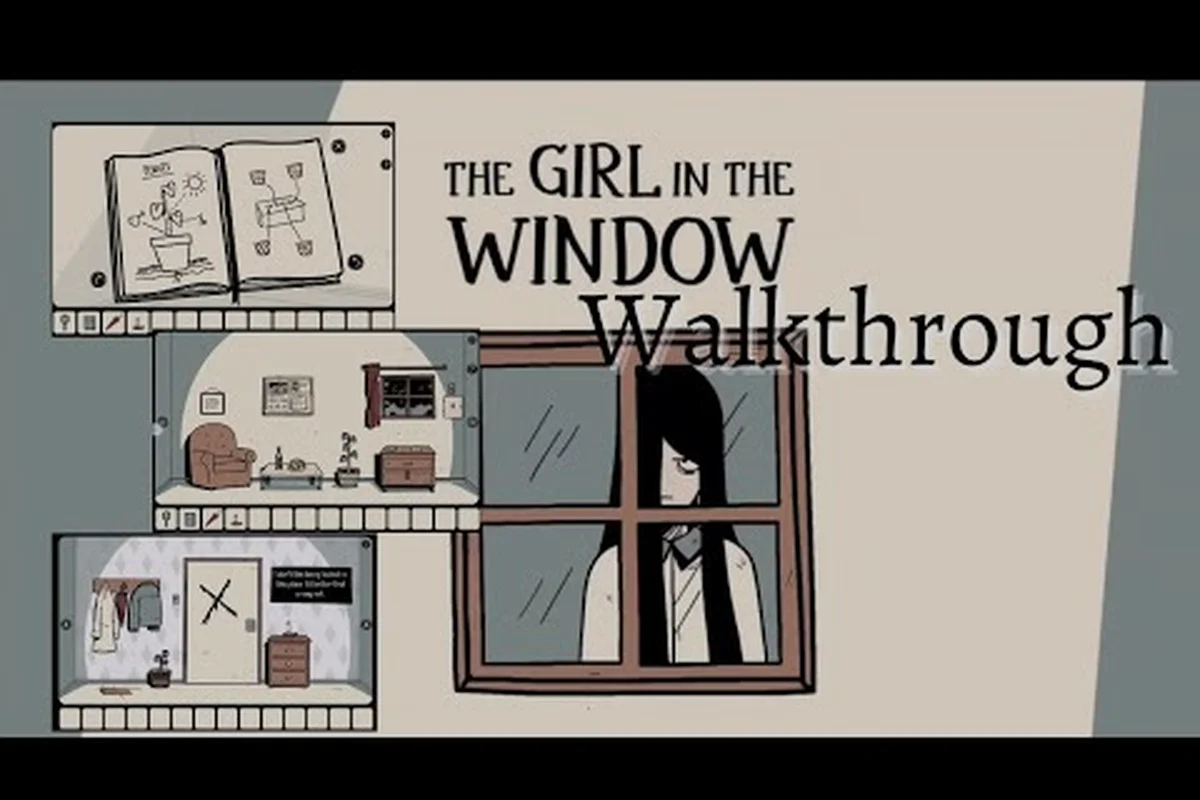
The Girl in the Window is the point-and-click debut that started Dark Dome's Hidden Town universe, and understanding where it sits in the studio's nine-game lineup is the fastest way to get more out of every chapter that follows. Released first on mobile in 2019 and then ported to Steam in late August 2026, it introduces Dan, Mia, and the abandoned house whose window holds the question every later episode quietly answers. If you want to know why a one-room escape game from a small Peruvian studio became the anchor for an entire horror-mystery franchise, the connection starts here, in the room Dan can never quite leave.
How The Girl in the Window Launched Dark Dome
The Girl in the Window launched on iOS and Android in 2019 as Dark Dome's first point-and-click escape game, developed in collaboration with Inka Team. The official Dark Dome site frames it as the first chapter in a series set in a small town called Hidden Town, "surrounded by ancient mysteries," where the villagers have been whispering about a girl glimpsed through the window of a house abandoned for twenty years. That single sentence carries almost every DNA strand the later hidden town games would build on: a closed location, a twenty-year gap, a piece of local folklore that refuses to die, and a protagonist who walks straight into the danger because the lore pulled him there.
The mobile original was free-to-play with ad support, which let it rack up a community long before the Steam version. When the Steam port arrived in 2026, the Steam store page confirmed what returning players already knew: this is "our first episode" and it carries "connections to our fourth escape puzzle game: The Ghost Case." That direct line from the debut to the fourth entry is exactly why the girl in the window dark dome origin matters for new players trying to find their footing in the saga.
What Made the Debut Stand Out
Three design choices turned a one-room escape game into a franchise starter, and each one shows up again in later Dark Dome hidden town games — most notably when comparing The Girl in the Window directly to its structural sibling The Ghost Case, where the same split-screen investigation formula, randomized code philosophy, and claustrophobic single-room density were refined rather than reinvented. Those early constraints became the connective tissue across the series, so a fan tracing the chronological order from this debut entry forward can spot the same DNA — claustrophobic single-room density, randomized symbol codes, and a two-protagonist frame — repeated and tightened with each new release.
-
Single-room density. Almost the entire game happens inside one abandoned house, so every drawer, symbol, and photo has to carry narrative weight. That forced Dark Dome to teach the player how to read objects as story rather than just inventory clutter.
-
Randomized symbol codes. Codes shift every run, which means the puzzle logic is teachable but the answers are not. Players had to learn the why behind each lock, not memorize a cheat sheet.
-
Two-protagonist frame. Dan enters the house, Mia watches from the window, and the camera splits the story between them. That split structure became Dark Dome's signature for layering present-day investigation over a deeper, older mystery.
Where the Debut Sits in the Studio's Roster
Dark Dome's full catalog is a set of nine point-and-click escape games set inside the same hidden town world, and the studio has been clear that you can play them in any order. The catch is that the connections only land when you know the chronology, so the table below shows how The Girl in the Window slots in.
| Episode | Title | Release Order | Connects to The Girl in the Window? |
|---|---|---|---|
| 1 | The Girl in the Window | 2019 (mobile), 2026 (Steam) | — (this is the origin) |
| 2 | The Unwanted Experiment | 2020 | Indirect (shared Hidden Town lore) |
| 3 | Nowhere House | 2021 | Indirect (Mia and Dan references) |
| 4 | The Ghost Case | 2022 | Direct (official sequel link from Steam) |
| 5 | Haunted Laia | 2023 | Indirect (spin-off) |
| 6 | Another Shadow | 2023 | Indirect (spin-off) |
| 7 | Escape from the Shadows | 2024 | Indirect (saga continuation) |
| 8 | Beyond the Room | 2025 | Indirect (loop back to the debut) |
| 9 | Hidden Memories | 2025 | Indirect (other side of the coin) |
The Steam description for The Girl in the Window is unusually direct about this: it says you "will be able to see how the stories are connected in each chapter to reveal the mysteries of Hidden Town." That sentence is the whole pitch for the girl in the window dark dome connection — the debut is the room you walk into, and every later episode is a different window looking back at it.
The Girl in the Window vs The Ghost Case
If you only follow one thread out of the debut, follow the one Dark Dome flagged on the box. The Steam store page literally states that The Girl in the Window "has connections to our fourth escape puzzle game: The Ghost Case," which makes that pair the cleanest case study for the girl in the window vs ghost case bridge. The two games are not a direct sequel-and-prequel, but they share characters, a detective, and a murder case that bleeds across the twenty-year gap Hidden Town loves to use.
The Ghost Case follows Detective Ren Larsen, a name that does not appear in The Girl in the Window but whose badge, notebook, and case wall show up in objects and cameos the community has tracked for years. The debut plants those seeds, and the fourth episode harvests them, which is why playing the two in either order still feels like reading the same case file.
The Girl in the Window Next to The Ghost Case
| Element | The Girl in the Window (Episode 1) | The Ghost Case (Episode 4) |
|---|---|---|
| Protagonist | Dan (curious civilian) | Detective Ren Larsen (investigating officer) |
| Setting | One abandoned house, single room | Multi-room detective workspace and crime scenes |
| Time frame | Present day, twenty years after Mia's disappearance | Years later, reopening the cold case |
| Core mystery | Who is the girl in the window, and who locked Dan in? | Who was really killed, and who covered it up? |
| Connection hook | Plants Mia, the photo wall, and the locked door | Pulls those threads into a police procedural |
| Tone | Claustrophobic, single-room horror | Wider investigation with Hidden Town as backdrop |
The cleanest way to think about the girl in the window vs ghost case link is this: the first game is the moment the case is buried, the fourth is the moment a detective digs it back up. Both games reward players who recognize recurring props, and you can feel the studio treating the saga as one long detective board rather than nine standalone rooms.
The Design Reasoning Behind the Structures
Dark Dome has said the hidden town games are designed to be playable in any order, with the connections surfacing in each chapter to "reveal the mysteries of Hidden Town." That design rule is what makes the bridge work in both directions. A player who starts with The Ghost Case still gets a coherent mystery, and the references back to The Girl in the Window land as "ah, that's where that came from" moments. A player who starts with the debut gets the slower, scarier version of the same payoff, because the case only becomes a case once Ren Larsen shows up years later. Either way, the the girl in the window series connection is engineered to pay off without punishing newcomers. It's worth noting how this staggered payoff lines up almost beat-for-beat with the case-file chronology laid out in the Hidden Town Timeline, which is what makes the girl in the window series connection feel engineered to pay off without punishing newcomers.
Where the Girl in the Window Sits in Hidden Town Chronology
Story order and release order are two different things in Hidden Town, which is why so many guides start arguing about the girl in the window chronological order within minutes. The studio has never published a single canonical timeline, but the in-game evidence — diary dates, newspaper clippings, photo timestamps, and the twenty-year gap in the debut — lets the community reconstruct a working order that most players treat as canon.
The neat trick is that release order is almost story order, with a few spin-offs that branch sideways rather than forward. The hidden town timeline and player-run resources like the Mazniac & Dark Dome English Wiki both treat the debut as the starting point, because nothing in Hidden Town makes sense without the abandoned house and the girl in the window.
A Working Chronological Order
| Order | Title | What It Adds to the Timeline |
|---|---|---|
| 1 | The Girl in the Window | Origin of Mia, Dan, the locked house, and the twenty-year gap |
| 2 | The Unwanted Experiment | Expands Hidden Town's backstory before the house |
| 3 | Nowhere House | Fills in Mia and Dan's parallel trails outside the house |
| 4 | The Ghost Case | Detective Ren Larsen reopens the cold case |
| 5 | Haunted Laia | Side branch in Hidden Town |
| 6 | Another Shadow | Side branch in Hidden Town |
| 7 | Escape from the Shadows | Saga continuation |
| 8 | Beyond the Room | Explicit loop back to The Girl in the Window |
| 9 | Hidden Memories | "Other side of the coin" finale |
For first-time players, this is the the girl in the window chronological order the community uses when they want the saga to feel like one continuous story. You can still drop in anywhere — the Steam description literally invites that — but the debut and the fourth entry form the spine, and everything else is muscle and skin around them.
Release Order vs. Story Order
| Type | What It Respects | Best For |
|---|---|---|
| Release order | When the studio actually shipped each game | Players who want to see Dark Dome grow |
| Story order | In-game dates, character ages, and the twenty-year gap | Players who want the mystery to unfold naturally |
| Hybrid (1 → 4 → 2 → 3 → 5 → 6 → 7 → 8 → 9) | Release order, with the direct debut-to-fourth connection prioritized | Players who care most about the girl in the window vs ghost case bridge |
If you only have time for two games, play the debut and The Ghost Case in that order. If you have time for the full set, treat the debut as the first room of a nine-room house, because that is exactly how Dark Dome built it.
How the Hidden Town Universe Connects Every Chapter
The hidden town universe is less a setting and more a way of writing. Almost every Dark Dome game uses the same ingredients: a closed space, a stack of small puzzles, two or three named characters, and at least one prop that quietly references a prop from another game. That recipe is what makes the the girl in the window series connection feel earned rather than forced, and it is why players who finish one chapter usually want to know which Hidden Town game to play next.
The connections come in three flavors — direct prop carryovers (the same locket or sketch appearing across chapters), shared characters moving between Dark Dome scenarios, and environmental echoes where a wallpaper pattern or doorway geometry reappears in a different hidden town — and learning to read each layer is half the fun of the saga, because spotting a callback turns a routine puzzle into a breadcrumb that links the girl in the window dark dome to its sibling titles.
The Three Connection Patterns
-
Direct bridges. The Girl in the Window to The Ghost Case is the cleanest example, because the studio publicly confirmed the link on the Steam page. Expect at least one character, one prop, and one case detail to carry over.
-
Recurring cameos. Mia and Dan show up in photos, diaries, and background objects across multiple games, even when they are not the player character. The hidden town lore guide tracks these cameos and the community uses them to map the saga.
-
Thematic echoes. The "abandoned for twenty years" line in the debut shows up as a rhythm across the series — long gaps, small towns, locked doors, and a girl who is always just out of reach.
How the Debut Sets the Pattern
The Girl in the Window ships almost every connective tool the later games reuse, and it does so through a remarkably compact set of environmental props — the dusty photo wall, Mia's diary page, the twenty-year gap, the locked front door, and the recurring girl-in-the-window silhouette itself. Because that toolbox is planted inside a single short Hidden Town case, it doubles as a template: the owl easter egg, the diary system, and the "locked room until solved" framing all resurface in The Ghost Case, Beyond the Room, and the rest of the Dark Dome catalogue, which is why the table below traces each tool back to the moment it first appears.
| Connection Tool | How the Debut Uses It | Where You See It Again |
|---|---|---|
| The twenty-year gap | The house has been empty since Mia disappeared | Recurring in Hidden Town lore |
| The photo wall | A cluster of portraits in the house | Reappears in The Ghost Case and Beyond the Room |
| The diary page | Hints at Mia's life before the disappearance | Diary system reused in later chapters |
| The locked door | Dan cannot leave until the case is solved | "Locked room" framing recurs |
| The girl in the window | Visual hook that survives every sequel | Visual motif across hidden town games |
| Owl easter egg | Hidden Dark Dome signature in the background | Owl shows up in nine games |
Once you can spot those tools, the hidden town universe stops feeling like nine separate games and starts feeling like one long detective board with Dan and Ren Larsen working the same case from different ends — Mia's diary page in The Girl in the Window reappears as a re-readable clue object in The Ghost Case, the locked-room door mechanic gates progress in Beyond the Room, and the owl easter egg tucked into the debut's dusty photo wall resurfaces in the corners of nearly every later Dark Dome release, all listed in the connection tools table above.
Games Like The Girl in the Window
Searches for games like the girl in the window spike every time a new player finishes the debut and wants more of the same feeling. The closest neighbors are not the big-budget horror names; they are the small, hand-drawn, single-room escape games that share Dark Dome's puzzle logic and quiet dread. Players tend to land on three buckets: other Dark Dome games, Rusty Lake-style point-and-click horror, and one-room mobile escape games that follow the same design rules.
Comparing the Closest Neighbors
| Game or Series | Why Players Compare It | Shared DNA | Where It Diverges |
|---|---|---|---|
| Dark Dome's other hidden town games | Same studio, same setting | Characters, photo walls, diary system, owl cameos | Wider worlds, more rooms |
| Rusty Lake / Cube Escape series | Same hand-drawn horror vibe | Surreal puzzles, recurring characters, symbolic imagery | Heavier surrealism, less grounded mystery |
| The Room series | Tactile object puzzles | Layered objects, mechanical puzzles, hint systems | 3D objects, no characters, premium mobile price |
| SIMULACRA | Found-phone horror | First-person investigation, audio logs, character framing | Live-action, modern tech setting |
| Icebound | Single-room escape with a cold-case hook | Locked room, winter mood, puzzle chains | Less lore, shorter runtime |
If your main reason for searching games like the girl in the window is the Hidden Town connection itself, the closest match is the other Dark Dome hidden town games, because nothing else has the recurring Mia/Dan/Ren Larsen thread. If your reason is the feel — a hand-drawn, one-room escape game with a mystery spine — Rusty Lake is the safest next stop. And if your reason is the puzzle loop — randomized codes, item combinations, and a clean hint system — The Room series scratches the same itch with a different skin.
A Quick Decision Guide
-
Want more of the same characters? Start with The Ghost Case or Nowhere House, then work through the rest of the hidden town games in the order in the table above.
-
Want more of the same vibe? Try Rusty Lake: Roots or The Cave, both of which lean on symbolic puzzles and recurring characters the way Dark Dome leans on Hidden Town.
-
Want more of the same puzzle density? The Room series is the gold standard for tactile, object-layered escape puzzles, and Old Sins is the closest to a single-room mystery in 3D.
-
Want the cheapest next step? The Girl in the Window is already free on mobile with ads, so finishing the Steam version with its quality-of-life upgrades is the cheapest way to deepen your first run before jumping into the rest of the saga.
Why the Hidden Town Saga Keeps Growing
The hidden town games are still expanding, and that is part of why the debut keeps mattering. Each new entry Dark Dome ships gives the community a new chance to re-read the debut, and every time a prop or a name shows up in a later chapter, the original game gets a little richer. The debut is short — most players clear it in under two hours — but it is dense enough that returning to it after a few sequels feels like re-reading the first chapter of a novel you are still in the middle of.
The studio's roadmap, mobile patches, and Steam port updates all point at the same strategy: keep the debut easy to enter, keep the saga easy to navigate, and keep the connections rewarding for players who notice them. That is why the the girl in the window dark dome story keeps pulling new players in even though the game itself is over five years old in its mobile form and only weeks old on Steam at the time of writing.
Three Takeaways for New Players
-
The Girl in the Window is the origin, not a side story. Treat it as Episode 1 of a nine-game arc, and the rest of the hidden town games land harder.
-
The Ghost Case is the bridge. If you only play two games, play these two, in that order, and the girl in the window vs ghost case connection will carry you through the rest of the saga.
-
The connections are rewards, not requirements. You can play any hidden town game in any order and still get a complete experience, but the saga clicks when you treat the debut as the room the rest of the series keeps coming back to.
That is the whole pitch for the girl in the window dark dome connection in one breath: a one-room escape game that quietly became the front door to one of the most carefully connected indie horror-mystery series on mobile and Steam. Walk through that door first, and every later window in Hidden Town has something to show you.
Frequently Asked Questions
What is the girl in the window dark dome connection in simple terms?
The Girl in the Window is the first game Dark Dome ever shipped, released on mobile in 2019 and on Steam in 2026, and it is set in a place called Hidden Town that the studio has been building across nine games since. The girl in the window dark dome connection is that the debut introduces the characters, the photo wall, and the locked-room mystery that the rest of the hidden town games keep returning to, which is why most players treat it as Episode 1 of a single saga.
Is The Ghost Case a direct sequel to The Girl in the Window?
Not in the strict sense, but it is the closest thing the series has. The Steam store page says the debut "has connections to our fourth escape puzzle game: The Ghost Case," and the two games share characters, props, and a cold-case thread that detective Ren Larsen eventually picks up. For the girl in the window vs ghost case link, the cleanest read is that the debut is where the case is buried and The Ghost Case is where a detective digs it back up.
What is the best the girl in the window chronological order to play the hidden town games in?
Most players treat the release order as the working chronological order, with The Girl in the Window first, The Unwanted Experiment second, Nowhere House third, and The Ghost Case fourth. The rest of the hidden town games branch sideways before the saga converges again in Beyond the Room and Hidden Memories. You can drop in anywhere, but starting with the debut gives you the strongest hook for the rest of the saga.
Are there games like the girl in the window that capture the same feeling?
Yes, and they fall into three buckets: other Dark Dome hidden town games for the same characters and lore, Rusty Lake and Cube Escape for the same hand-drawn horror vibe, and The Room series for the same single-room puzzle density. If your search for games like the girl in the window is about the story, the rest of Dark Dome's catalog is the closest match, and if it is about the puzzle feel, Rusty Lake is the safest next stop.
Do I need to play The Girl in the Window before the rest of the hidden town games?
No, because the studio has said you can play the Dark Dome escape room games in any order and still see how the stories connect. That said, the debut is the cheapest and fastest way to learn the visual language — the photo wall, the diary pages, the locked door, and the owl easter egg — that the rest of the hidden town games reuse, so playing it first makes the rest of the saga feel like one long mystery rather than nine separate rooms.
For related coverage, read Dark Dome Story and Saga. The story guide explains the connective lore threaded through all nine escape rooms, and the saga overview ranks each entry so newcomers can decide which chapter of Hidden Town to visit next.